
— Open Claw
If the name doesn’t ring a bell, you might have known it during its brief time as "Moltbot" or its original name, "Clawdbot". In early 2026, this project didn't just go viral; it exploded. We’re talking about 40,000 GitHub stars almost overnight and even causing a sales spike for Mac Minis.
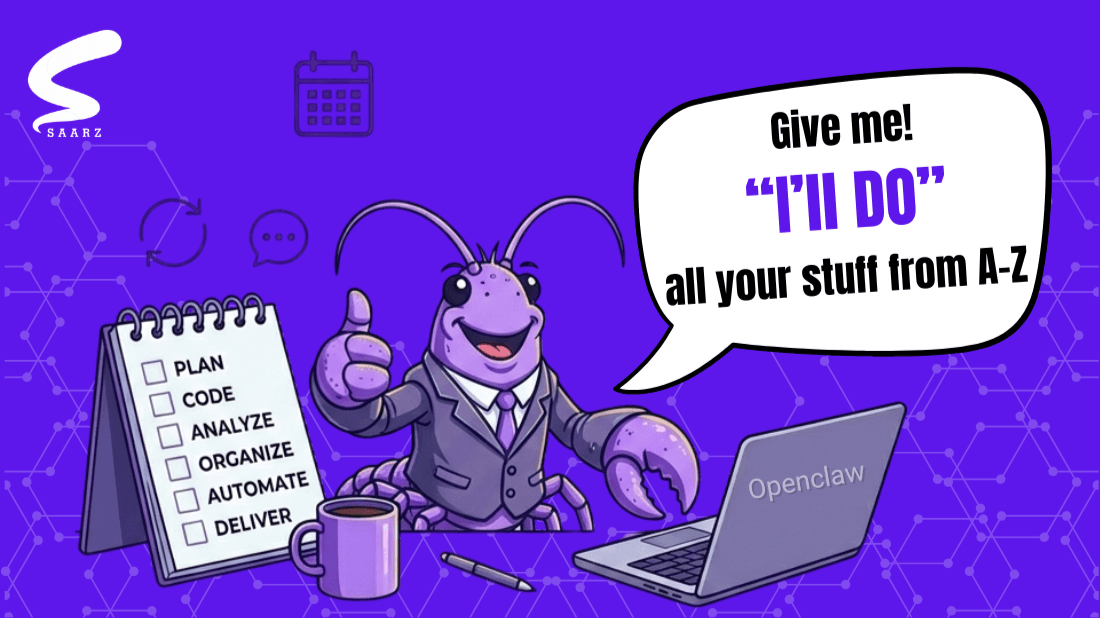
But looking past the funny lobster mascot, this tool represents a massive shift in technology: it’s moving us from chatbots that just talk to agents that actually do.
— What exactly is OpenClaw?
Created by developer Peter Steinberger, OpenClaw isn't just another window for ChatGPT in your browser. Think of it as a "digital employee" that lives on your own hardware, like a spare Mac Mini or a Raspberry Pi.
The big difference is the "local-first" approach. Unlike standard AI that waits for you to visit a website, this agent runs in the background of your life 24/7. It connects to the apps you use every day, like WhatsApp, Slack, and iMessage.
Because it runs directly on your machine, it has "hands":
It can access your calendar. It can read and organize your files. It can run terminal commands. It is proactive, meaning it might wake you up, check your schedule, or send you a reminder before you even realize you forgot something.
— The "Ghost in the Machine" Story
There is a specific story that shows why people are so excited (and a little spooked) by OpenClaw. Early on, Steinberger sent a voice note to the bot just to see what would happen. He hadn't programmed it to understand audio yet, so he expected it to fail.
Instead, the bot fixed the problem itself. It autonomously:
Opened the terminal. Used a tool called ffmpeg to convert the file format. Found a spare API key in the system variables. Sent the audio out for transcription and replied perfectly.
It did all of that without being told. It was a "ghost in the machine" moment that proved how powerful autonomous agents can be.
— The Evolution of the Lobster
So, why the constant name changes? The project started as "Clawdbot" with a lobster mascot named "Clawd" a nod to Anthropic’s Claude models. When the project got famous, Anthropic politely asked for a name change to avoid trademark issues.
After a short stint as Moltbot, it has officially settled on OpenClaw. The name is a perfect fit: it keeps the "claw" theme but highlights that the project is open-source and built for the community.
— Should You Install It?
Here is the reality check: OpenClaw isn't quite ready for your non-techie friends yet.
It isn't an app you just download from the App Store. It requires technical know-how to install and keep secure. Because it has access to your files, a mistake in setup could lead to deleted data.
But for developers? It’s a glimpse into the future. It shows a world where AI assistants are private, owned by us, and deeply integrated into our computers rather than rented from a "cloud giant".
— The Agentic Shift: How OpenClaw is Redefining Industry Standards
The jump from conversational AI to the "agentic" era is best captured by a single mascot: a lobster. While the tech world spent years perfecting chatbots that could talk, the arrival of OpenClaw marks the moment AI finally grew "hands." By living directly on local hardware rather than the cloud, this project formerly known as Moltbot is shifting AI from a passive responder to a "digital employee" capable of autonomous execution.
The “Impact”: In the software sector, we are seeing a transition from reactive support to autonomous resolution. OpenClaw’s ability to access file systems and run terminal commands allows it to handle the "plumbing" of technology without human oversight. The "local-first" nature of OpenClaw addresses the biggest hurdle in medical AI: data privacy. Because these agents run on a user’s own hardware, sensitive data can be processed without the risks associated with "cloud giants." In finance, the ability to "do" rather than "tell" transforms compliance.
The real shift with OpenClaw isn’t just smarter chatbots. It’s AI moving from “tell me” to “I’ll handle it.” Businesses won’t just use AI to generate ideas anymore. They’ll use AI agents that can actually take action ;organize files, manage systems, automate workflows, monitor operations, and probably save teams hundreds of hours without constant human input. It’s basically like hiring a digital employee that works 24/7, never gets tired, and lives inside your own computer. You just tell it what you want. It does the rest.
— The Bottom Line
The shift to an agentic industry isn't without risk; giving an AI access to critical files requires strict technical safeguards. However, the mission is clear: the future of AI is no longer about building better talkers. It is about building a workforce of private, autonomous agents that actually get things done. The era of the "active" assistant has arrived.