
— UGC video
If you've spent more than five minutes on TikTok or Instagram recently, you've probably watched a UGC video without even realizing it.
Someone is unboxing a skincare product. Someone else is explaining why they switched protein powders. Another creator is walking through a budgeting app they "can't live without."
None of these videos look like advertisements—and that's exactly why they work.
Consumers have become incredibly good at spotting traditional marketing. The polished commercials and perfectly scripted ads don't hold attention the way they used to. People trust recommendations that feel genuine, even when they're only a minute long.
That's why UGC has become one of the most valuable assets in digital marketing.
But here's the challenge.
Creating authentic content at scale isn't nearly as easy as people think.
— The UGC Bottleneck
Every successful UGC campaign depends on creators.
That means finding the right people, negotiating rates, waiting for filming, requesting revisions, approving content, and then doing it all over again for the next campaign.
Now imagine you're launching in five countries.
Or you need twenty different ad variations.
Or your performance marketing team wants to test ten different hooks this week.
The production process suddenly becomes the bottleneck—not the ideas.
And that's exactly where AI UGC enters the conversation.
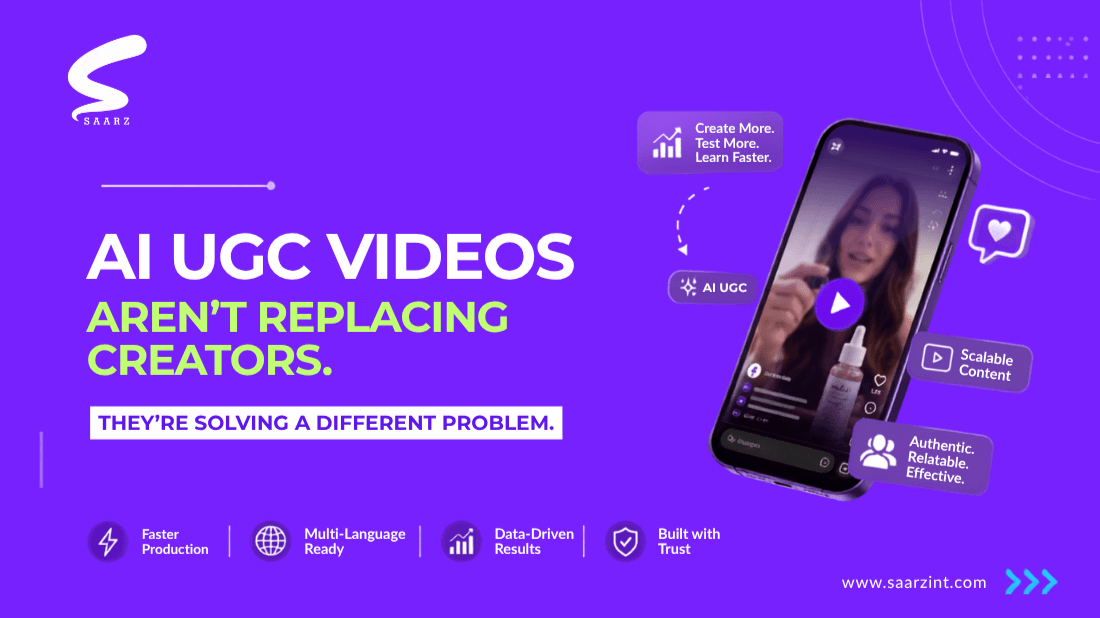
— AI Isn't Replacing UGC. It's Making It Scalable.
There's a common misconception that AI-generated UGC is trying to replace creators.
It isn't. It's solving a completely different problem.
Businesses don't always need a new influencer every time they want to test a landing page, launch a seasonal campaign, or localize an advertisement.
Sometimes they simply need a spokesperson.
Someone who can deliver the message naturally.
Today, AI avatars can do exactly that.
With realistic facial expressions, natural voice synthesis, accurate lip-syncing, and support for multiple languages, brands can generate videos that feel conversational instead of corporate.
Not because AI is pretending to be human.
But because modern marketing has shifted toward communication that feels human.
— The Numbers Explain Why Businesses Are Paying Attention
This isn't just another marketing trend.
The investment behind generative AI tells a much bigger story.
McKinsey estimates that generative AI could contribute between $2.6 trillion and $4.4 trillion every year to the global economy, with marketing and sales expected to capture one of the largest shares of that value.
That isn't because AI writes better headlines.
It's because it removes production bottlenecks.
Campaigns that previously took weeks to create can now be produced, tested, and optimized in days.
For marketing teams, speed has become a competitive advantage.
— Content Is No Longer the Problem
A few years ago, marketers struggled to create enough content.
Today, content isn't the challenge.
Creating the right content is.
That's where AI UGC becomes interesting.
Instead of making one testimonial video, brands can test twenty.
Different openings.
Different audiences.
Different languages.
Different calls-to-action.
The goal isn't to flood social media with AI videos.
The goal is to learn faster.
Every variation becomes another data point that helps marketers understand what actually connects with customers.
— But Here's the Catch...
As AI-generated videos become easier to create, authenticity becomes harder to fake.
Consumers are becoming more aware that videos, voices, and even faces can now be generated by AI.
That means trust is becoming even more valuable.
Gartner has repeatedly highlighted that organizations adopting generative AI need strong governance and responsible implementation—not just faster production.
Because at the end of the day, people don't remember that your video was generated in five minutes.
They remember whether they believed it.
— The SAARZ Int. View
AI UGC isn't the future because it replaces people.
It's the future because it removes friction.
Businesses shouldn't spend weeks producing every single marketing video when technology can handle repetitive production.
That frees creative teams to do what they do best—develop ideas, tell better stories, and build stronger customer relationships.
The brands that will stand out over the next few years won't be the ones producing the most AI content.
They'll be the ones using AI thoughtfully, balancing efficiency with authenticity, and knowing exactly when technology should lead—and when people should.